How AI Reshapes Building Blueprints for Profit (2026)
Author: Manus AI
Date: May 2, 2026
Executive Summary
The architectural and construction industries are on the cusp of a revolution driven by Generative AI. This article delves into how Artificial Intelligence is transforming the traditional design process, enabling architects and developers to explore countless design iterations, optimize space utilization, and maximize profitability. By leveraging advanced platforms like Autodesk Forma, professionals can rapidly generate and analyze building layouts, perform environmental simulations, and make data-driven decisions that lead to more efficient, sustainable, and profitable real estate projects. Understanding and adopting generative design principles is crucial for staying competitive and innovative in the rapidly evolving real estate landscape of 2026.
Introduction: Beyond Traditional Design
For centuries, architectural design has been a labor-intensive process, relying heavily on human intuition, experience, and iterative manual adjustments. While invaluable, this traditional approach often limits the exploration of design possibilities and can be slow to adapt to changing requirements or complex site conditions. However, the emergence of Generative AI is fundamentally altering this paradigm. Generative design uses AI algorithms to automatically generate a multitude of design solutions based on a set of defined goals and constraints, offering unprecedented efficiency and innovation in architectural planning .
What is Generative Architecture Design?
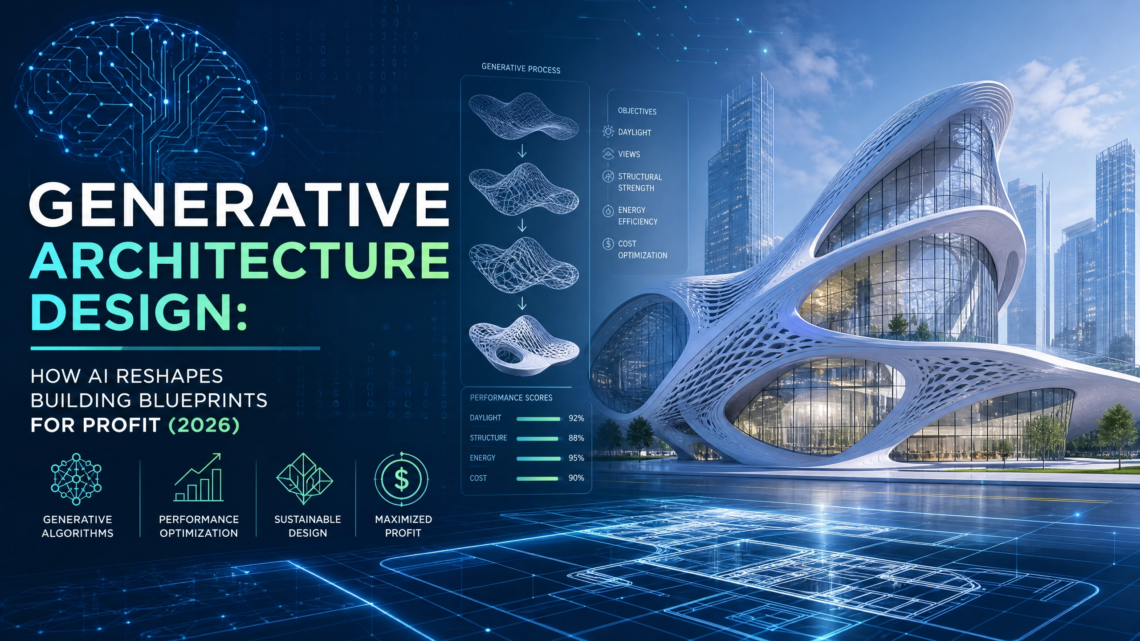
Generative architecture design is a process where designers input specific parameters, goals, and constraints (e.g., building size, desired views, sunlight exposure, energy efficiency targets, budget, zoning regulations) into an AI system. The AI then explores thousands, or even millions, of potential design solutions that meet these criteria. Designers can then review, refine, and select the most optimal solutions, often discovering innovative layouts that human designers might not have conceived .
Key Principles of Generative Design in Architecture (2026):
•Goal-Driven Exploration: Instead of drawing a design, designers define the desired outcomes.
•Constraint-Based Generation: The AI adheres to specified limitations, such as site boundaries, structural requirements, and regulatory codes.
•Performance Optimization: Designs are evaluated against performance metrics (e.g., energy consumption, daylighting, circulation efficiency, cost) to find the best fit.
•Rapid Iteration: The ability to quickly generate and assess numerous options accelerates the design process significantly.
Autodesk Forma: Leading the Generative Design Revolution
Autodesk Forma (formerly Spacemaker) is a cloud-based AI platform that is at the forefront of generative design for urban planning and architectural conceptualization. Its recent updates in 2026 have made it an indispensable tool for developers and architects .
Autodesk Forma’s Key Features for Generative Architecture (2026):
•AI Building Layout Explorer: This groundbreaking feature automatically generates and details multiple building options within minutes, based on specific site conditions, zoning regulations, and programmatic requirements. It allows for rapid exploration of different massing and layout strategies .
•Real-time Environmental Analysis: Forma provides instant feedback on critical environmental factors such as:
•Solar Analysis: Optimizes building orientation and facade design for maximum daylighting and minimal solar gain.
•Wind Analysis: Assesses wind comfort and pedestrian-level wind conditions to create more pleasant outdoor spaces.
•Daylight Analysis: Ensures optimal natural light penetration within proposed designs.
•Site Automation and Optimization: Accelerates the process of site and building layout design, helping users explore and optimize hundreds of design options to maximize return on investment (ROI) .
•Neural CAD Integration: Connects AI-generated designs with traditional CAD (Computer-Aided Design) workflows, allowing for seamless transition from conceptualization to detailed design in tools like Revit .
•Parametric Design Capabilities: Users can define design rules and relationships, allowing Forma to generate variations that adhere to these parameters.
Benefits of Autodesk Forma for Real Estate Developers and Architects:
•Maximized Site ROI: By exploring optimal building footprints and massing, Forma helps developers achieve higher density and more valuable layouts.
•Accelerated Design Process: Reduces conceptual design time from weeks to days, allowing for quicker decision-making and project initiation.
•Enhanced Sustainability: Designs are inherently more energy-efficient and environmentally responsive due to integrated analyses.
•Improved Collaboration: Cloud-based platform facilitates seamless collaboration among architects, urban planners, and developers.
•Data-Driven Decision Making: Provides quantitative data to support design choices, leading to better outcomes and easier stakeholder buy-in.
The Future of Generative AI in Real Estate Development
The impact of generative AI extends beyond just architectural design. It is poised to influence:
•Urban Planning: Optimizing city layouts for traffic flow, green spaces, and infrastructure.
•Construction Planning: Generating efficient construction schedules and logistics plans.
•Interior Space Optimization: Designing interior layouts that maximize functionality and aesthetic appeal.
•Personalized Property Design: Creating bespoke property designs tailored to individual client preferences at scale.
Conclusion: AI as the Blueprint for Future Real Estate
Generative AI in architecture is not just a tool; it’s a paradigm shift. It empowers architects and developers to transcend traditional limitations, fostering creativity while ensuring optimal performance and profitability. Platforms like Autodesk Forma are leading this transformation, making it possible to design buildings and urban spaces that are not only aesthetically pleasing but also highly efficient, sustainable, and economically viable. Embracing generative design is essential for anyone looking to shape the future of real estate in 2026 and beyond.
Call to Action (Affiliate Section)
Ready to revolutionize your architectural design and real estate development process? Explore the power of generative AI:
•Autodesk Forma: Discover how AI can help you explore optimal building designs and maximize your project’s potential. [Link to Autodesk Forma Affiliate Program/Website]
Shape the future of real estate with intelligent, data-driven design.
References:
[1] Graitec. (2025). Neural CAD And Generative Design In Forma: What’s New.
[2] ArchBIM.cloud. (2026). Forma Building Design — Autodesk’s New Tool Changes ….
[3] Autodesk. (2026). Introducing Forma Building Design – ADSK News.
[4] Autodesk. (n.d.). Forma Site Design Login | Software Price & Buy.
[5] Autodesk. (2026). Autodesk Forma March 2026 Construction Releases.